Hard water & scale
White buildup, water spots, or cloudy glassware can be useful starting observations.

Get a calm, practical conversation about what you are noticing at home, trustworthy local information, and water-treatment categories worth understanding.
Prefer to talk? Call 442-351-5845
Use your ZIP code to find relevant provider and state resources. The result is educational context—not a claim about water at your faucet.
Start with your ZIP code. We’ll point you to relevant public water information and next steps to consider.
Regulatory compliance and personal water preferences are not identical. A useful conversation begins with what you notice at home and credible local context—not fear.
White buildup, water spots, or cloudy glassware can be useful starting observations.
Some households want to understand chlorine-like taste, odor, or general drinking-water preferences.
A more intentional kitchen-water routine starts with knowing the available approaches.
Visible particles and residue can lead to a useful discussion about source information and treatment categories.
Water is part of cooking, showering, cleaning, and caring for appliances—not just what you drink.
Your utility’s annual report can provide context without establishing conditions at your individual faucet.
You do not need a diagnosis to begin a useful conversation. Choose the household water questions that feel familiar.
When you do not know which provider report applies to your home, it is easy to make decisions from generic advice. This factual guide shows you where to begin, what a public report can explain, and what it cannot determine.
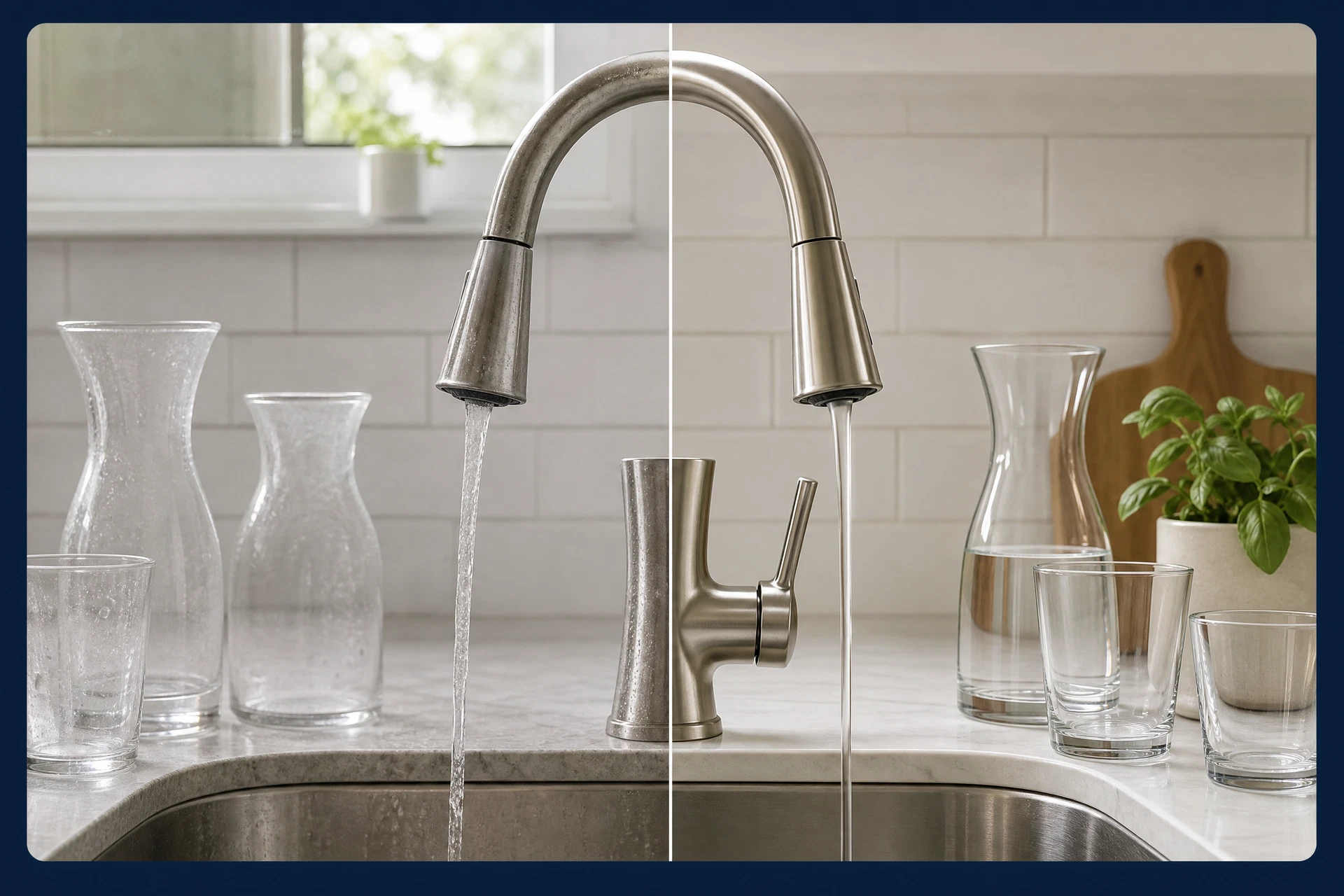
Water spots, fixture buildup, taste preferences, or questions after reading a report can all be a useful starting point. We help homeowners compare categories, maintenance expectations, and locally relevant public information in plain language.
Explore common treatment categories, then decide what deserves a closer look for your home.
A category of systems designed to treat water as it enters the home. The right setup depends on the concern, the water source, and the equipment’s verified capabilities.
Understand this option 02At the drinking tapA point-of-use category commonly considered for kitchen drinking and cooking water. System performance and reduction claims vary by design and certification.
Understand this option 03Hardness evaluationIon-exchange softening is a distinct approach for hardness minerals. It is not the same as filtration, which is why a clear evaluation matters.
Understand this option 04A different approachConditioning technologies work differently from traditional softening. The practical effect depends on the specific technology and your household’s goal.
Understand this option 05Kitchen confidenceA focused way to consider the water used for drinking, cooking, coffee, and refillable bottles—without changing the whole home.
Understand this option 06From symptom to optionsHard water can show up as scale or spots. An evaluation can help distinguish a hardness concern from taste, odor, sediment, or another household question.
Understand this optionWe are building a useful Southern California water-quality resource, beginning with communities where homeowners are looking for clear answers.
Explore service areasThere is no pressure in understanding the difference between a water filter, water softener, test, or consultation.
Explore water-quality basicsThe complimentary consultation is designed to help you discuss visible concerns such as hardness, scale, taste, odor, and treatment options. It is not represented as certified laboratory testing or a diagnosis of every potential contaminant.
Not necessarily. Traditional softening primarily addresses hardness minerals through ion exchange. Filtration and softening solve different types of questions, so many homes evaluate more than one category.
No. ZIP guidance can point you to water-system information and relevant public reports, but it cannot establish the exact conditions at an individual faucet. Service areas, plumbing, and household use can all differ.
No. The goal is to help you understand the options that may make sense for your home so that you can decide what, if anything, you want to do next.
Get a clearer place to start, then decide what makes sense for your home.